The Environmental Impact
How living tree towers restore natural landscapes, support biodiversity, and create a pollinator lattice across Ghana's regions.
Indigenous Tree Species & Biodiversity
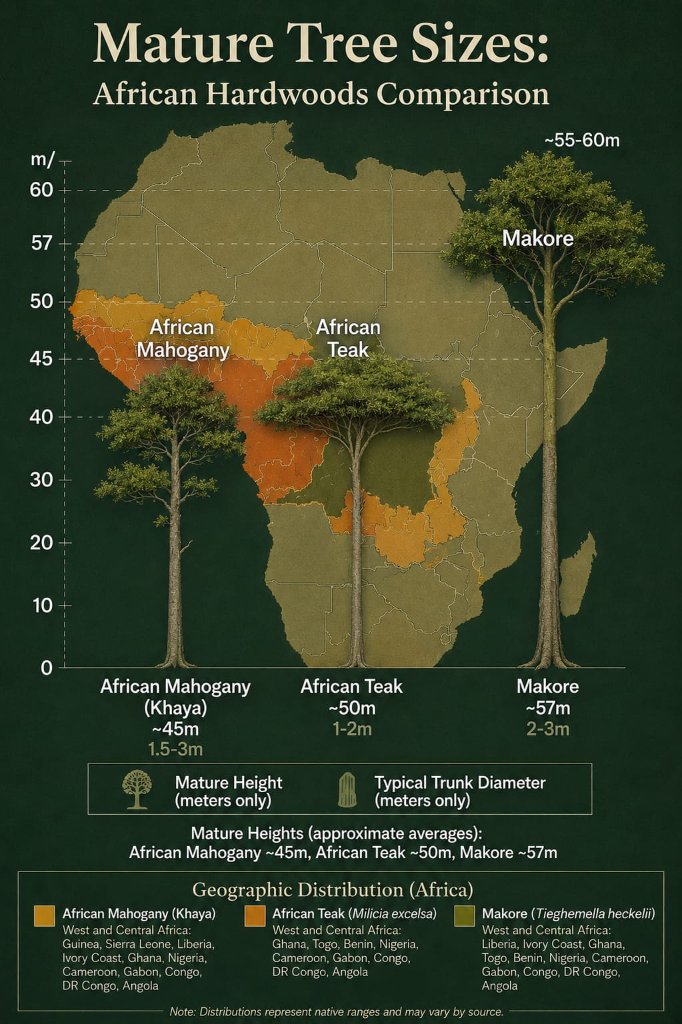
Approximately 3,000 indigenous tree species will be integrated into this project, sourced from regional seed banks and nurseries. The focus on indigenous species - 90% of which can be cultivated aeroponically - aligns with ecological standards and promotes sustainable development. Three West African species stand out for their structural capacity and ecological value:
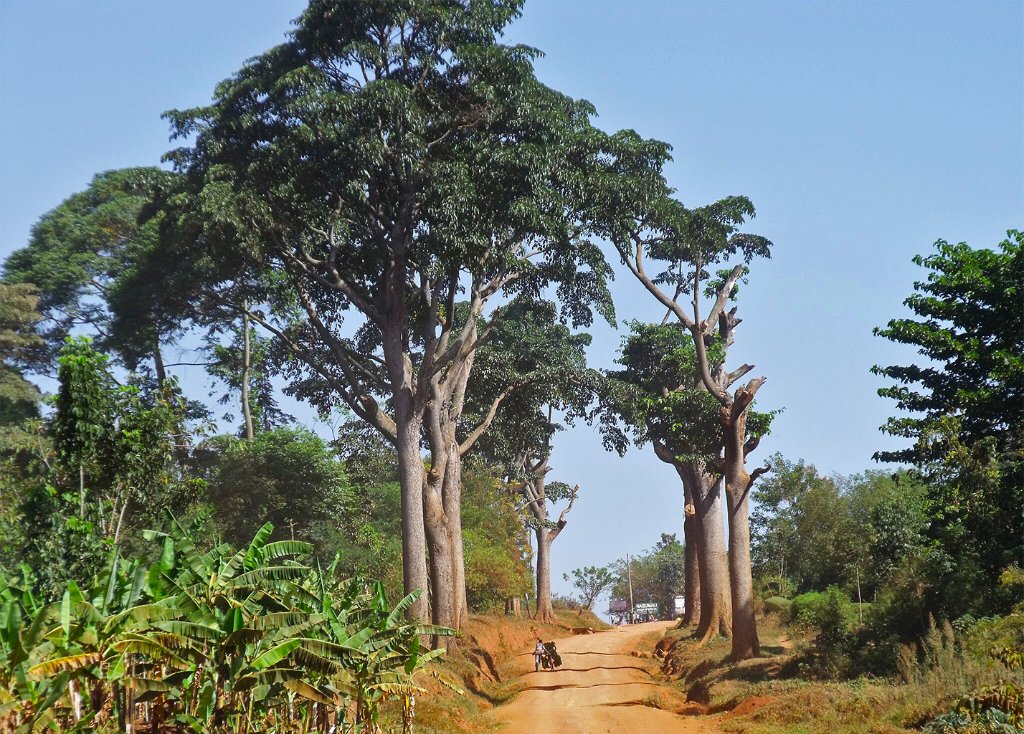
Tieghemella heckelii (Makore / African Cherry)
This species grows up to 45 meters (148 feet) tall on average. The iconic 'Big Tree of Oda' in Ghana reaches 66.5 meters (218 feet), making it the tallest tree in West Africa.
Khaya senegalensis (African Mahogany)
A deciduous evergreen capable of reaching 15–30 meters (49–98 feet), offering excellent structural density and load-bearing capacity for tower applications.
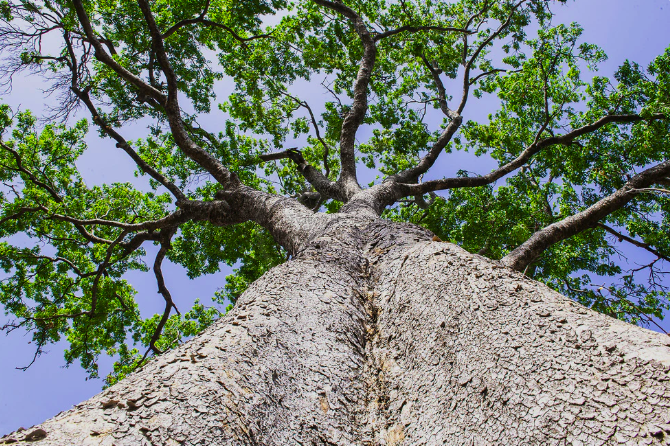
Milicia excelsa (African Teak / Iroko)
An impressive species reaching heights of up to 50 meters (164 feet), prized for its strength and resilience in structural applications.
Ecosystem Services: Each tower hosts a multi-layer canopy supporting pollinators (bees, butterflies, bats) and birds. Root networks improve soil mycorrhizal density, sequestering 2–4 tonnes of CO₂ per tower per decade. Native species act as windbreaks, reducing soil erosion and improving microclimate humidity - measurable benefits for surrounding cocoa, cashew, and shea farms within a 500 m radius.
Smart Monitoring: Each living tower is instrumented with dendrometers (growth sensors), tilt sensors, and wireless strain gauges transmitting real-time structural telemetry. Machine-learning algorithms flag anomalies - drought stress, pest infestation, or load shifts - enabling proactive maintenance without physical inspection.
Pollinator Lattice & Agricultural Prosperity
How the TreeGridTowerZ lattice functions as a resilient pollinator network - supporting food security and rural livelihoods.
Ecological Science
Each tower hosts a multi-layer canopy supporting pollinators (bees, butterflies, bats) and birds. Root networks improve soil mycorrhizal density, sequestering 2–4 tonnes of CO₂ per tower per decade. Native species also act as windbreaks, reducing soil erosion and improving microclimate humidity - measurable benefits for surrounding cocoa, cashew, and shea farms within a 500 m radius.
Sensor & Monitoring Technology
Each living tower is instrumented with embedded dendrometers (growth sensors), tilt sensors, and wireless strain gauges transmitting real-time structural telemetry to a central monitoring platform. Machine-learning algorithms flag anomalies - drought stress, pest infestation, or unexpected load shifts - before they become structural risks, enabling proactive maintenance without physical inspection.