Living Infrastructure
& Technology
How biology, structural engineering, and telecommunications converge to create a certified living telecommunications infrastructure, engineered for formal appraisal under Ghana's existing regulatory frameworks.
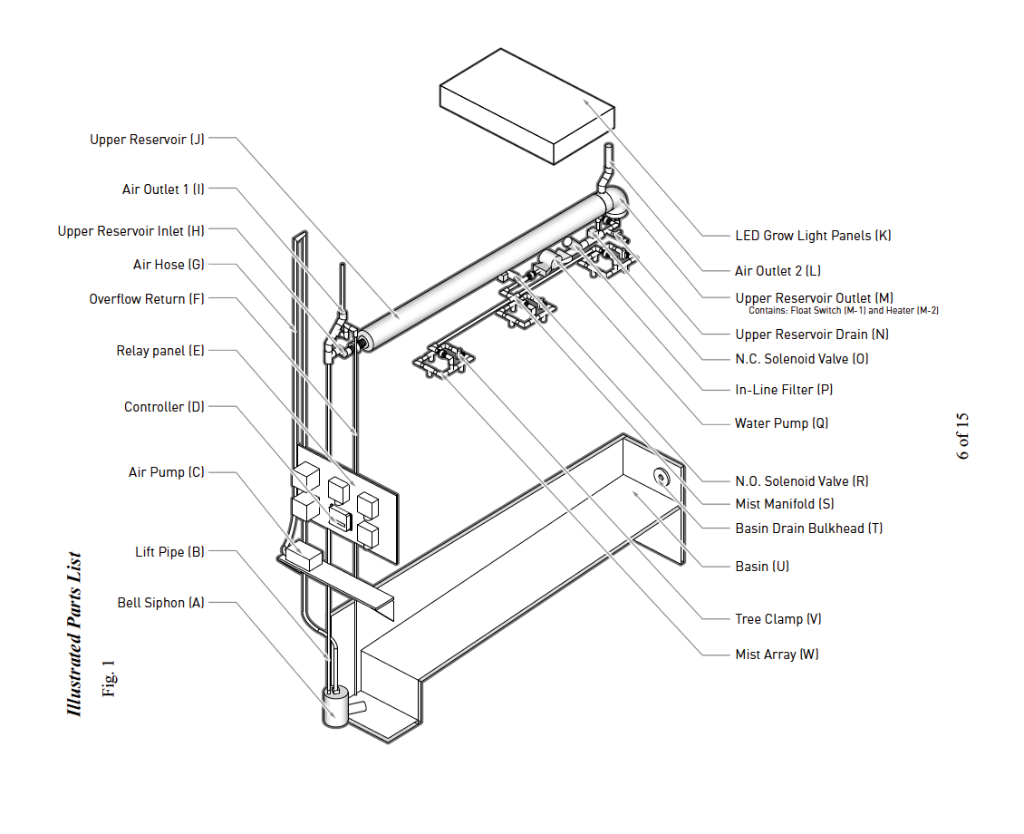
Aeroponic Cultivation
Aeroponics suspends plant roots in a misted air environment, delivering oxygenated nutrient solutions directly to the root zone. This method produces seedlings 3–5× faster than soil cultivation, with 95% less water usage. Our Vancouver facility uses closed-loop aeroponic chambers optimized for African Mahogany (Khaya senegalensis), African Teak (Milicia excelsa), and Makore (Tieghemella heckelii), species selected for their structural density, tensile strength, and load-bearing capacity.
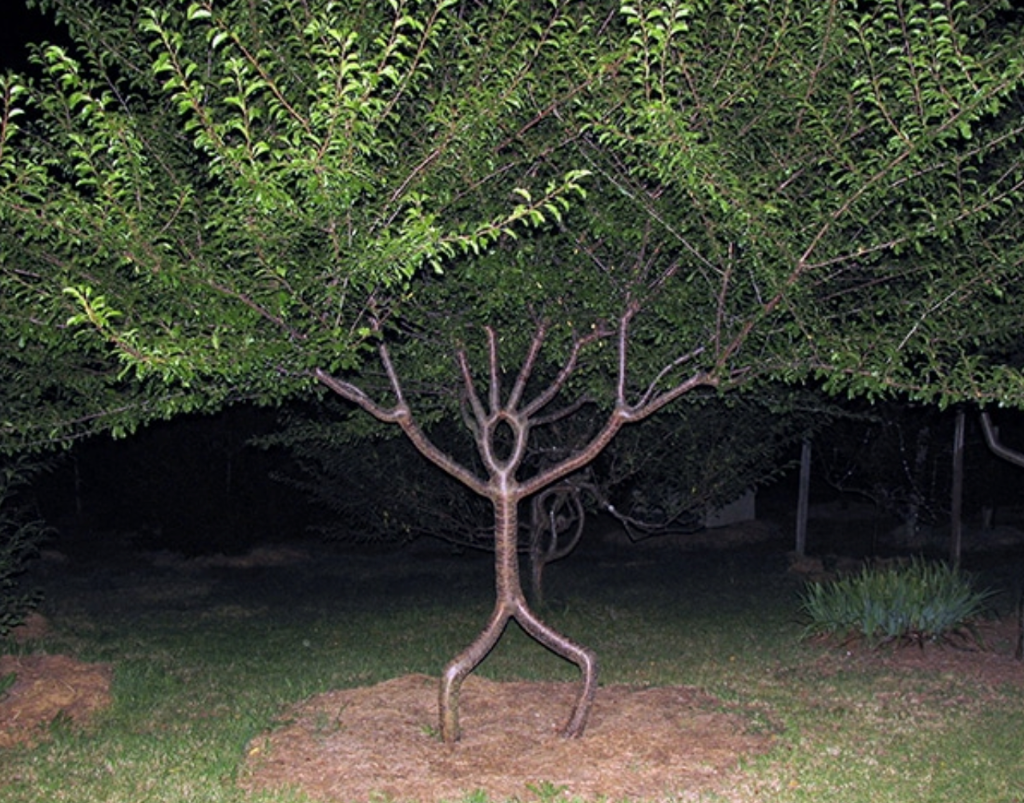
Bio-Structural Shaping (Arborsculpture)
Guided growth (arborsculpture) directs juvenile saplings into load-bearing forms using non-invasive frames and inosculation (a process where two touching branches naturally fuse into a single structural element). Over the first year, trees are shaped into tripod, lattice, or column forms capable of supporting telecom payloads of 200–500 kg at heights of 15–30 m. Wood density in primary tropical species exceeds 700 kg/m³, rivalling structural steel in compressive strength per unit weight.
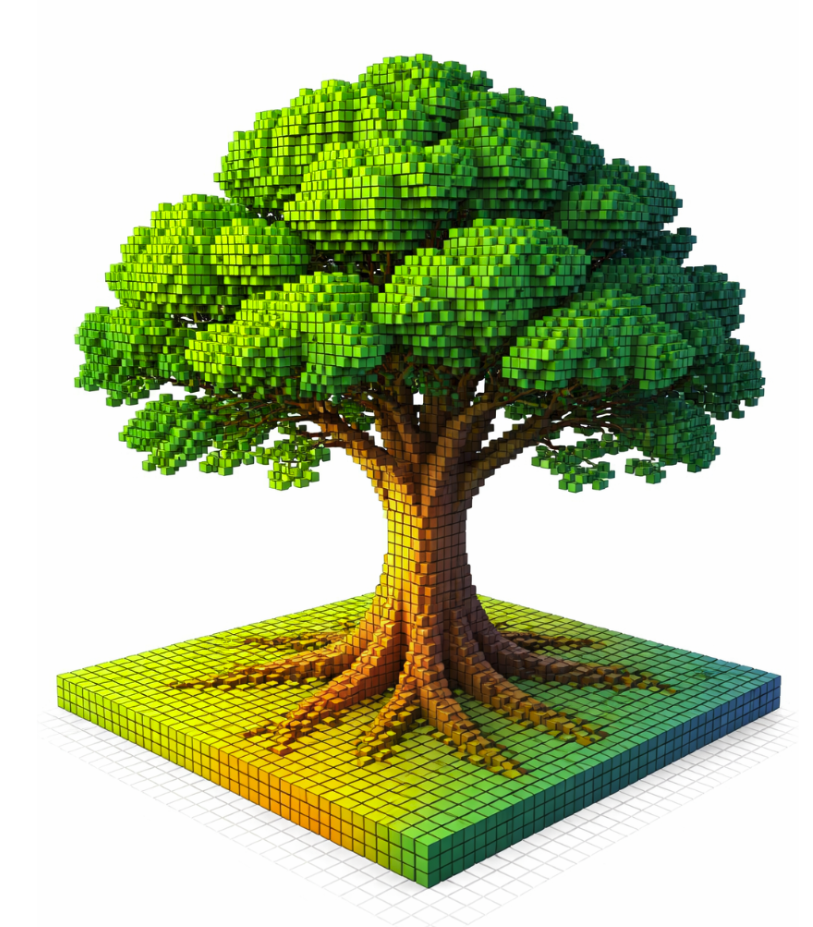
Finite Element Method (FEM) Voxelation
Each living tower is digitally scanned via LiDAR* and decomposed into thousands of voxels (3D cubic units). FEM analysis calculates stress distribution, wind load deflection, and resonance frequency at each voxel, producing a structural certification model equivalent to engineer-stamped steel drawings. This allows regulators to certify living towers under Ghana's existing telecommunications infrastructure codes.*LiDAR (Light Detection and Ranging) is a remote sensing technology that uses rapid laser pulses to measure precise distances and build highly accurate, three-dimensional models of real-world environments.
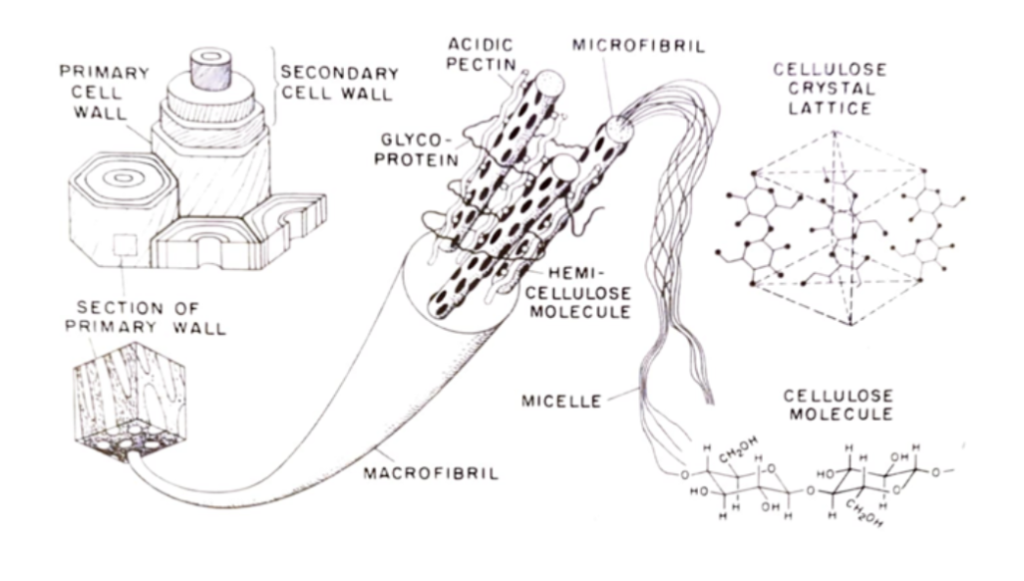
The Authority on Plant Biomechanics
Despite the fact that it would seem that load-bearing calculations in living trees require a different set of rules compared to man-made structures, it actually isn't. The laws of physics do not discriminate between biological and synthetic materials. Whether a structure is composed of steel beams or lignified cellulose, it is subject to the same fundamental forces of gravity, wind load, and torque. The primary difference lies not in the rules of physics, but in the complexity and variability of the material itself.
Key Authority
The definitive resource on this subject is Karl J. Niklas, a Professor of Plant Biology at Cornell University. His work provides the essential bridge between botany and structural engineering, proving that plants can-and should-be analyzed as engineering structures.
In his seminal book, "Plant Biomechanics: An Engineering Approach to Plant Form and Function," Niklas rigorously details how standard engineering formulas apply to plant biology. He outlines how trees solve mechanical problems-such as supporting their own weight and withstanding wind drag-using the same principles found in civil engineering.

Figure G1
"Plant Biomechanics: An Engineering Approach to Plant Form and Function" by Karl J. Niklas - the foundational text for understanding the structural engineering of living systems.
Telecom Integration
At the tree apex (15–30 m), a weatherproof equipment enclosure houses Remote Radio Units (RRUs), Baseband Units (BBUs), sector antenna panels (4G LTE / 5G NR), and microwave backhaul dishes. The 8 km lattice spacing ensures full 4G coverage overlap and 5G small-cell readiness. Power is delivered via buried cable or on-site solar with battery backup - no diesel generators required.
Tower Construction: The Living System Model
For those who wish to pursue tower construction while preserving sustainability and ecosystem services, the living system model dramatically reduces costs. While traditional towers begin at $100,000, a living system tower is capped at a maximum of $65,000.
This is because the majority of the tower's mass does not need to be brought on site. Instead, it is sequestered from the air as photosynthesis occurs - trees integrated into the construct absorb CO₂ and convert it into cellulose and lignin, creating the strong wooden matrix that structurally supports the tower.
Implementation & Operational Strategy
Immediate negotiations for communications technology housing within these towers are crucial for timely project execution. Contracts for the rental of communications cages can begin immediately upon project commencement. Towers will become operational gradually, starting from one year after project initiation up to seven years after, as trees mature and equipment is installed progressively across the national lattice.
Vancouver Aeroponic Facility
Guaranteed Supply Management
The aeroponic growth facility will be built in Vancouver and managed by Mendel Skulski, an expert who has successfully constructed similar systems. Skulski brings hands-on experience from co-constructing the aeroponic chamber at New York Navy Yards and served as former president of the Vancouver Mycological Society. This facility ensures real-time supply of aeroponically cultivated trees for the project.
Expert Strategic Access
World-Class Expertise
Mendel Skulski provides access to Ezekiel Golan and Mitchell Joachim. Golan previously grew two 6-meter aeroponically cultivated trees in Israel, which were shipped 9,000 km to Japan for the Aichi World Expo 2005, demonstrating expertise in aeroponic cultivation and international logistics. Mitchell Joachim, co-founder of Terreform ONE and professor at NYU (with connections in Accra), brings visionary architectural integration of natural systems with technological infrastructure. His pioneering work includes constructing the first living Fab Tree Hab.
Why Canada?
Infrastructure & Expertise
Vancouver offers robust infrastructure, agricultural expertise, and consistent electricity supply essential for uninterrupted aeroponic operations. Canada's extensive network of seed banks, nurseries, and connections with Kew Gardens London ensures steady access to regional tree species. This minimizes supply chain disruptions and guarantees high-quality tree production from project inception.
Why Aeroponically Shaped Trees Excel
Transportability
Lightweight shaped trees can be moved in a backpack to remote forest sites, eliminating the need for heavy equipment and tarred roads - critical in regions where infrastructure spans tens or hundreds of kilometers.
Zoning Flexibility
Shaped trees enable tower construction on agricultural land and natural reserves, creating valuable elevated space that maximizes revenue potential through efficient antenna and equipment housing.
Functional Integration
Built-in structural features like integrated stairs allow easy access to elevated equipment spaces, unlike natural trees that require climbing equipment and pose safety risks.
Deployment Efficiency
Aeroponically grown trees mature in 4–6 years with guaranteed quality, whereas mature tree relocation requires heavy machinery, extended timelines, and ecological disruption.